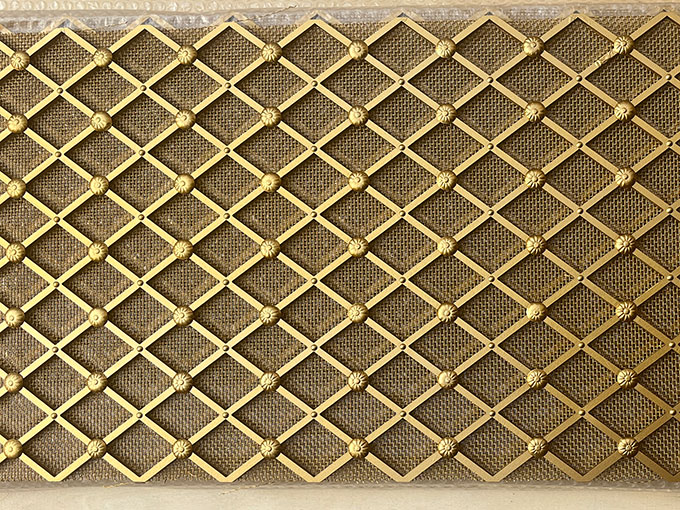
Elevator cab mesh has transformed the way designers approach elevator interiors. No longer limited to plain stainless steel panels or laminated surfaces, modern elevator cabs now feature textured metal mesh that adds depth, light, and sophistication to what was once one of the most overlooked spaces in a building.
In this comprehensive guide, we explore what makes Elevator Cab Mesh unique, how it is manufactured, its key benefits, and the wide range of applications where it delivers outstanding performance.
Elevator cab mesh is a specialized architectural mesh designed specifically for interior elevator cladding. Made from stainless steel wires (304 or 316 grade), the mesh is woven in patterns that create visual interest while remaining thin enough (typically 1mm–3mm overall thickness) to fit within standard elevator panel frames. The mesh can be mounted directly onto elevator cab walls using adhesive or mechanical fastening systems, and is often backed with contrasting materials — such as colored panels, mirrors, or LED lighting — to create dramatic visual effects through the mesh openings.
Each manufacturing method and material choice offers distinct advantages in terms of structural strength, filtration precision, visual appearance, and adaptability to different environments. Understanding these differences is key to selecting the right product for your specific application.
Specifications matter when mesh is being designed into critical systems. The performance characteristics below are the metrics engineers most often cite when justifying Elevator Cab Mesh selection in technical submittals.
Stainless 304/316 Elevator Cab Mesh exhibits tensile strength of 515–620 MPa with elongation of 40%+, allowing significant plastic deformation before failure — important for impact and seismic loading scenarios.
Standard 304 stainless Elevator Cab Mesh operates continuously from -200°C to +870°C. For temperatures beyond 870°C, upgraded alloys (310, 314, Inconel) extend the envelope significantly. Sintered variants handle cryogenic and super-heated steam service.
The open area of Elevator Cab Mesh is precisely controllable, allowing predictable pressure drop curves in filtration and ventilation systems. Empirical flow data on common aperture/wire combinations is available on request.
Depending on mesh count and weave type, Elevator Cab Mesh achieves filtration ratings from 25 microns to 2,000 microns. Dutch weave and sintered variants reach sub-micron ratings for critical applications.
Elevator Cab Mesh demonstrates measurable sound attenuation when used as backing material in perforated panel systems, contributing to NRC values relevant for auditoriums, lobbies, and open-plan offices.
Stainless steel is non-combustible (Class A1 per EN 13501-1), produces no smoke or toxic emissions, and does not contribute to fire load — a key reason Elevator Cab Mesh is preferred over polymer-based screens in critical infrastructure.
Elevator cab wall cladding and ceiling panels, luxury hotel and office building elevator interiors, retail and shopping mall elevator upgrades, hospital and medical facility elevator finishes, airport and transit hub elevator cabins, custom residential elevator design, elevator door cladding and frame accents, combined with LED backlighting for dramatic visual effects.
The versatility of Elevator Cab Mesh continues to expand as engineers and designers discover new applications across emerging industries. From advanced manufacturing to sustainable building design, this material plays an essential role in modern industrial and architectural innovation.
Selecting the right Elevator Cab Mesh product depends on several factors:
Application environment: Consider temperature, humidity, chemical exposure, and mechanical stress.
Material grade: 304 for general use, 316/316L for corrosive environments, specialty alloys for extreme conditions.
Mesh specifications: Wire diameter, aperture size, and open area affect both performance and appearance.
Panel dimensions: Standard sizes vs. custom cutting for your specific installation requirements.
Surface finish: Mill finish, brushed, polished, or coated — each suited to different aesthetic and functional needs.
Our experienced technical team is available to help you evaluate these factors and recommend the optimal product for your project.
Located in Anping County, Hebei Province — globally recognized as the "Hometown of Wire Mesh" — Anping Qingning Wire Mesh Co., Ltd. has been a trusted manufacturer and exporter of metal mesh products for over two decades. Our commitment to quality, innovation, and customer satisfaction has earned us the trust of clients across Europe, North America, the Middle East, Australia, and Southeast Asia.
Our factory is equipped with advanced production machinery and comprehensive quality testing facilities. Every order — whether a small custom sample or a full container shipment — receives the same attention to detail and quality assurance. We also provide technical consultation, custom fabrication, sample testing, and reliable global logistics support.
Elevator Cab Mesh delivers a powerful combination of functionality, durability, and value across a remarkably diverse range of applications. Whether you are specifying materials for a landmark architectural project, sourcing critical filtration components, or designing industrial processing equipment, choosing the right Elevator Cab Mesh from a trusted manufacturer is the foundation of project success.
Contact Anping Qingning Wire Mesh Co., Ltd. today to discuss your requirements. Our expert team is ready to provide professional recommendations, competitive quotations, and exceptional service to help bring your project to life.
About Anping Qingning Wire Mesh Co., Ltd.
We are a leading manufacturer of stainless steel decorative mesh, filter wire mesh, conveyor belts, and architectural metal mesh products. With over 20 years of experience, we serve global clients in architecture, filtration, and industrial sectors. Visit our website at www.metal-fabrics.com for more information.