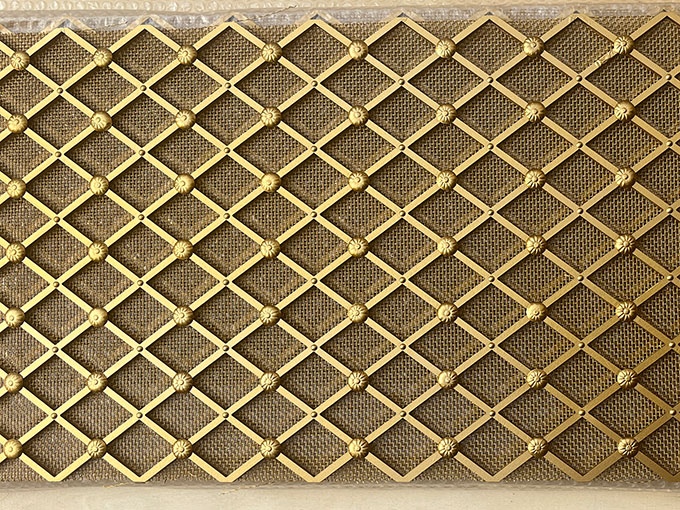
Expanded metal mesh is one of the most efficient and versatile metal mesh products available today. Unlike woven or welded mesh, expanded metal is produced from a single solid sheet, meaning there are no joints or welds that can fail — making it exceptionally strong and reliable.
In this comprehensive guide, we explore what makes Expanded Metal Mesh unique, how it is manufactured, its key benefits, and the wide range of applications where it delivers outstanding performance.
Expanded metal mesh is manufactured by simultaneously slitting and stretching a solid metal sheet, creating a pattern of diamond-shaped openings. Because the mesh is formed from a single sheet, the material maintains continuous structural integrity — the strands are all part of the original sheet, not joined or welded. Available in standard, flattened, and decorative patterns, with sheet thicknesses from 0.5mm to 8mm and strand widths from 1mm to 10mm. Materials include stainless steel, aluminum, carbon steel, galvanized steel, copper, and brass.
Each manufacturing method and material choice offers distinct advantages in terms of structural strength, filtration precision, visual appearance, and adaptability to different environments. Understanding these differences is key to selecting the right product for your specific application.
The versatility of Expanded Metal Mesh is best understood through the industries it serves. Below are the sectors where this material is most extensively specified, and the specific performance reasons behind each adoption.
Building facades, balustrades, ceiling systems, and interior partitions benefit from the structural capacity and visual richness of Expanded Metal Mesh. Its long service life and low maintenance make it especially attractive for tall and landmark buildings.
From food and beverage processing to pharmaceutical manufacturing, Expanded Metal Mesh provides precise particle retention with predictable flow rates. Sintered variants handle high differential pressures where woven mesh would deform.
Oil & gas platforms, refineries, and power generation plants rely on Expanded Metal Mesh for catalyst recovery, mist elimination, and process screening. Alloys 316L and higher are specified where sour service or chloride exposure is anticipated.
FDA-compliant Expanded Metal Mesh variants serve conveyors, dryers, separators, and fluid bed equipment. The non-shedding metal surface and easy sterilization are central to hygienic processing environments.
Screening, classification, and dewatering operations use heavy-duty Expanded Metal Mesh variants built for abrasive service. Wear-resistant alloys extend screen life in high-tonnage aggregate plants.
Bridge railing infill, noise barrier screens, transit station facades, and tunnel safety systems all specify Expanded Metal Mesh for its fire resistance, low maintenance, and resistance to vandalism and graffiti.
Architectural facade panels and sun screens, security fencing and anti-climb barriers, walkway grating and platform surfaces, machine guards and equipment enclosures, HVAC air diffuser and filter supports, plastering and stucco reinforcement lath, concrete reinforcement in slab and wall construction, automotive and industrial filtration, shelving and storage rack surfaces, acoustic baffle panels.
The versatility of Expanded Metal Mesh continues to expand as engineers and designers discover new applications across emerging industries. From advanced manufacturing to sustainable building design, this material plays an essential role in modern industrial and architectural innovation.
Selecting the right Expanded Metal Mesh product depends on several factors:
Application environment: Consider temperature, humidity, chemical exposure, and mechanical stress.
Material grade: 304 for general use, 316/316L for corrosive environments, specialty alloys for extreme conditions.
Mesh specifications: Wire diameter, aperture size, and open area affect both performance and appearance.
Panel dimensions: Standard sizes vs. custom cutting for your specific installation requirements.
Surface finish: Mill finish, brushed, polished, or coated — each suited to different aesthetic and functional needs.
Our experienced technical team is available to help you evaluate these factors and recommend the optimal product for your project.
Located in Anping County, Hebei Province — globally recognized as the "Hometown of Wire Mesh" — Anping Qingning Wire Mesh Co., Ltd. has been a trusted manufacturer and exporter of metal mesh products for over two decades. Our commitment to quality, innovation, and customer satisfaction has earned us the trust of clients across Europe, North America, the Middle East, Australia, and Southeast Asia.
Our factory is equipped with advanced production machinery and comprehensive quality testing facilities. Every order — whether a small custom sample or a full container shipment — receives the same attention to detail and quality assurance. We also provide technical consultation, custom fabrication, sample testing, and reliable global logistics support.
Expanded Metal Mesh delivers a powerful combination of functionality, durability, and value across a remarkably diverse range of applications. Whether you are specifying materials for a landmark architectural project, sourcing critical filtration components, or designing industrial processing equipment, choosing the right Expanded Metal Mesh from a trusted manufacturer is the foundation of project success.
Contact Anping Qingning Wire Mesh Co., Ltd. today to discuss your requirements. Our expert team is ready to provide professional recommendations, competitive quotations, and exceptional service to help bring your project to life.
About Anping Qingning Wire Mesh Co., Ltd.
We are a leading manufacturer of stainless steel decorative mesh, filter wire mesh, conveyor belts, and architectural metal mesh products. With over 20 years of experience, we serve global clients in architecture, filtration, and industrial sectors. Visit our website at www.metal-fabrics.com for more information.